Whether you’re a building owner, facility manager, or building engineer, there’s one thing for certain: you understand the importance of knowing how to protect pipes from freezing in commercial buildings.
For many, winter is a time when employees cash in their PTO and the holidays are on everyone’s minds. But not you. You know a burst pipe can cause water damage in tenant spaces, interrupt business operations, lead to insurance claims, and even impair fire sprinkler systems. So, how exactly do you prevent it?
Source: State Farm
Knowing how to protect pipes from freezing is an important part of winter preparation for commercial buildings. However, the right approach depends on several factors, including where the piping is located, how exposed it is to freezing temperatures, and what measures are already in place to protect it.
This guide explains how to protect pipes from freezing in commercial buildings, including what makes commercial piping vulnerable, the common causes and warning signs of frozen pipes, and practical ways to prevent freeze-related damage.
Why Do Commercial Pipes Freeze?
Before we get into how to protect pipes from freezing, let’s go over a few important details, starting with why commercial pipes freeze to begin with.
Commercial pipes can begin to freeze when the water inside them reaches its freezing point of 32°F (0°C). This typically happens when piping remains exposed to cold conditions without enough heat or insulation to maintain the water temperature.
Once ice begins to form, it can restrict water flow and create pressure inside the piping system. Water also expands as it freezes, which can cause the pipe or a nearby fitting to crack. However, the damage may not become visible until temperatures rise, the ice thaws, and water begins escaping through the damaged area.
Knowing why commercial pipes freeze is important, but it is only part of understanding the risk. Several building and operational factors can make certain pipes more vulnerable than others.
What Makes Commercial Building Pipes Vulnerable to Freezing?
Commercial plumbing systems often extend across large facilities and support everything from water supply lines to HVAC equipment and fire sprinkler systems. The size and complexity of these systems can make it more difficult to maintain consistent temperatures and monitor every section of piping.
Several factors can make commercial building pipes more vulnerable to freezing:
- Long pipe runs that travel through different areas of the building
- Uneven heating between occupied and unoccupied spaces
- Reduced heat during nights, weekends, or seasonal closures
- Vacant or low-use areas where temperature changes may go unnoticed
- Remote piping that is difficult to inspect or monitor
- Large systems with multiple water lines, risers, valves, and connections
Schools, offices, warehouses, retail locations, and other commercial properties may also experience periods of reduced occupancy. During these times, heating schedules may change and water may remain unused for longer periods, leaving some pipes more exposed to freezing conditions.
These factors can create vulnerable sections of piping even when the main occupied areas of a building remain warm. This makes it important to know which areas of a commercial building are most likely to put pipes at risk.
Where Commercial Pipes Are Most Likely to Freeze
Commercial pipes are most likely to freeze in areas where temperatures are difficult to control. These locations may receive little building heat, remain exposed to outdoor conditions, or experience sudden temperature changes during equipment failures or periods of reduced occupancy.
Knowing where these areas are can help facility teams find vulnerable piping before freezing temperatures become a problem. Common locations include:
Pipes Along Exterior Walls
Pipes installed along exterior walls can lose heat quickly, especially when insulation is missing, damaged, or no longer properly secured. Cracks, gaps, and other openings in the building envelope can also allow cold air to reach piping concealed inside wall cavities.
Pipes in Unconditioned Spaces
Ceiling spaces, crawl spaces, stairwells, storage rooms, and other unconditioned areas may receive little or no direct heat. Temperatures in these locations can fall below freezing even while occupied areas of the building remain comfortable.
Mechanical Rooms and Rooftop Piping
Mechanical rooms may become vulnerable when heaters fail, vents remain open, or outdoor air enters through louvers. Rooftop HVAC piping, condensate lines, and other exposed equipment face additional risk because they are directly affected by outdoor temperatures and wind.
Parking Garages and Loading Docks
Parking garages and loading docks are often open or partially exposed to outdoor conditions. Pipes near entrances and frequently opened doors may experience repeated drafts and sudden temperature drops throughout the day.
Vacant or Low-Use Areas
Vacant tenant spaces and areas with limited occupancy may operate on reduced heating schedules. Because these spaces are checked less frequently, falling temperatures or heating failures may go unnoticed until a pipe has already started to freeze.
Fire Sprinkler Piping
Fire sprinkler lines may run through parking garages, ceiling spaces, loading areas, and other parts of a building that are difficult to heat. Freezing can damage the piping and affect the availability of the fire-protection system, making these lines especially important to identify and protect.
“Due to the safety implications and regulations involved with fire sprinkler freeze protection, heat tracing systems should always be reviewed against applicable codes, listings, and manufacturer design requirements. In the United States, heat tracing systems used for this application should meet applicable NFPA 13 requirements and be listed to UL 515A.” Paul van Oudenaren – Thermon Senior Manager, Product Management
These locations show where pipes are most likely to freeze, but location alone does not always explain why freezing occurs. Drafts, damaged insulation, reduced building temperatures, and equipment failures can increase the risk even further.
Common Causes of Frozen Pipes in Commercial Buildings
Pipes are more likely to freeze when they are exposed to cold temperatures for an extended period without enough protection. However, outdoor temperature is only one factor. A pipe’s location, insulation, and surrounding conditions can all affect how quickly it loses heat.
Several factors can increase the risk in commercial buildings:
Exposure to Cold Air and Drafts
Cold air can enter a building through gaps around doors, windows, vents, and wall penetrations. Pipes near loading docks, exterior doors, or poorly sealed openings may be exposed to these drafts, even when the rest of the building remains warm. Pipes along exterior walls or in other areas exposed to severe cold are often among the most vulnerable to freezing.
Unheated or Unevenly Heated Areas
Heating coverage can vary throughout a commercial building. Temperature setbacks, closed HVAC zones, poor airflow, or insufficient heating capacity may allow some areas to become much colder than occupied spaces.
Missing or Damaged Pipe Insulation
Pipe insulation helps reduce heat loss, but it must remain intact to provide effective protection. Missing sections, damaged insulation, or gaps around valves, fittings, and supports can leave parts of a pipe vulnerable to freezing.
Reduced Building Temperatures
Lowering the heat overnight, on weekends, or during seasonal closures can increase the risk of frozen pipes. Remote areas may cool faster than expected, especially if they already receive limited heat or are exposed to drafts.
Limited Water Use
Water may remain unused for long periods in low-use sections of a piping system. During extended cold weather, these areas may be more likely to freeze, especially when limited use is combined with reduced heating or poor insulation.
Heating or Power Failures
A failed heater, thermostat, or building control system can cause indoor temperatures to drop quickly. If the failure occurs overnight or in a remote area, nearby pipes may be exposed to freezing conditions before the issue is discovered.
How to Tell When Pipes Are Frozen in a Commercial Building
Frozen pipes are not always easy to spot, especially when they are located behind walls, above ceilings, or in remote areas of a building. However, changes in water flow, pressure, and the condition of exposed pipes can help facility teams identify a possible blockage.
Reduced or No Water Flow
A sudden drop in water pressure or little to no water coming from a fixture may indicate that ice is blocking the pipe. Check other fixtures in the same area to determine whether the issue affects one outlet or a larger section of the building.
Frost or Condensation on Exposed Pipes
Frost, ice, or unusual condensation on the outside of an exposed pipe may indicate that the water inside has started to freeze. Pay close attention to piping in mechanical rooms, parking garages, loading docks, and other areas exposed to colder temperatures.
Unusual Sounds from the Plumbing System
Banging, whistling, or gurgling sounds can occur when water tries to move through a restricted pipe. These sounds may point to an ice blockage, especially when combined with reduced water flow or pressure.
Changes in Water Pressure
A frozen section of pipe can restrict water flow and cause pressure to drop in the affected area. Pressure changes may appear at fixtures, risers, water supply lines, or through building monitoring systems.
Bulging, Cracks, or Leaks
Expanding ice can place pressure on the pipe and nearby fittings. A bulge, crack, or small leak may indicate that damage has already occurred. In some cases, the leak may not become visible until the ice starts to thaw.
Knowing the warning signs can help facility teams identify a frozen pipe before the damage becomes more extensive. However, the best approach is to reduce the risk before freezing occurs. Next, we’ll cover how to protect pipes from freezing in commercial buildings with six practical tips.
How to Protect Pipes from Freezing in Commercial Buildings: 6 Tips
Protecting commercial pipes from freezing requires more than one preventive measure. The right approach depends on the pipe’s location, the temperatures it may encounter, and the level of freeze protection already in place.
The following tips can help facility teams reduce the risk of frozen pipes before temperatures drop.
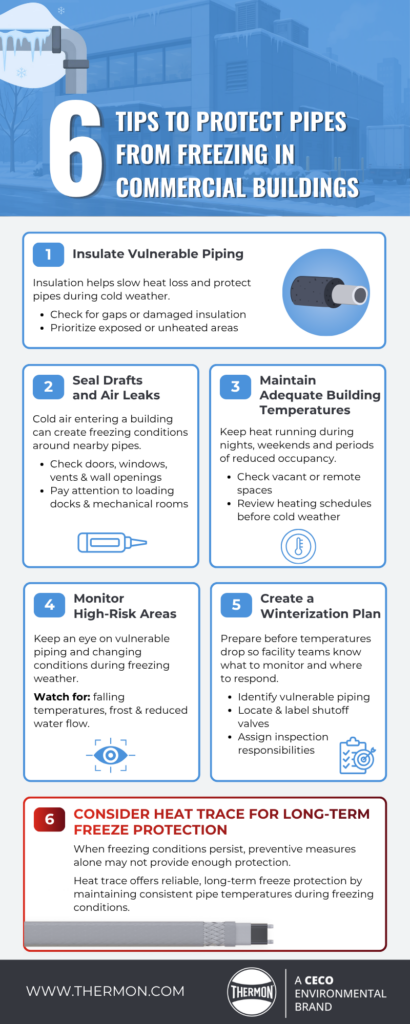
Insulate Vulnerable Piping
Pipe insulation slows heat loss and helps protect water lines from short periods of cold weather. Focus first on pipes located in exterior walls, mechanical rooms, parking garages, loading areas, rooftops, and other spaces that may not receive consistent heat.
Inspect existing insulation before winter to look for gaps, damage, or exposed sections. Pay close attention to valves, fittings, supports, and recently repaired areas, where insulation may be incomplete.
Seal Drafts and Air Leaks
Cold air can enter through gaps around doors, windows, vents, and wall penetrations. Even a small draft can create a cold spot that affects nearby pipes while the rest of the building remains warm.
Check areas near loading docks, exterior doors, utility openings, and mechanical rooms. Sealing these openings can help maintain a more consistent temperature around vulnerable piping.
Maintain Adequate Building Temperatures
Avoid turning the heat off completely during nights, weekends, seasonal closures, or other periods of reduced occupancy. Remote areas may cool much faster than occupied spaces, particularly when they already receive limited airflow or heat.
Review heating schedules throughout the building, including vacant suites, stairwells, storage areas, and mechanical spaces. If temperatures vary between areas, additional monitoring or localized heating may be needed.
Monitor High-Risk Areas
Temperature and leak monitoring can help identify changing conditions before a pipe freezes or bursts. Sensors are especially useful in remote, unoccupied, or difficult-to-access areas where a problem may otherwise go unnoticed.
During extended freezing weather, facility teams should also inspect mechanical rooms, parking garages, rooftop areas, and other vulnerable spaces. Check for falling temperatures, frost on exposed pipes, reduced water flow, changes in pressure, and alarms from heat trace, fire sprinkler, or Building Management Systems (BMS).
Create a Winterization Plan
A winterization plan gives facility teams clear steps to follow before and during freezing weather. It should identify vulnerable piping, document the locations of main and zone shutoff valves, and assign responsibility for inspections and temperature checks.
Before winter weather, confirm that shutoff valves are labeled and accessible. Staff responsible for the building after hours should also know where they are located. The plan should include procedures for vacant spaces, exterior water lines, heating or power failures, and any temperature or system alarms that need to be monitored.
Consider Heat Trace for Long-Term Freeze Protection
Insulation helps protect pipes by slowing heat loss, but it may not be enough in areas that remain exposed to freezing temperatures. For pipes in these locations, electric heat trace can provide a more reliable layer of freeze protection.
Heat trace cables are installed along the outside of a pipe and covered with thermal insulation. The cables provide heat as the pipe loses it, helping maintain the pipe and its contents above freezing. This makes heat trace especially useful for exterior piping, rooftop equipment, mechanical rooms, parking garages, and other areas where building heat may not reach.
Why Use Self-Regulating Heat Trace in Commercial Buildings?
Self-regulating heat trace adjusts its heat output as the pipe temperature changes. It produces more heat as temperatures fall and less as they rise. This helps provide heat where and when it is needed.
A complete heat trace system should be properly designed for the pipe, insulation, expected winter temperatures, and operating conditions. Thermon’s FLX™ self-regulating heating cable is one solution designed to provide freeze protection for metallic and nonmetallic pipes, tanks, and equipment.
The Cost of Frozen Pipes in Commercial Buildings
Now that you know how to protect pipes from freezing, let’s talk about something else those preventive steps can help protect: your budget.
If a pipe cracks or bursts, the total cost may include:
- Repairing or replacing the damaged pipe
- Removing standing water and drying the affected area
- Replacing damaged walls, ceilings, flooring, or insulation
- Repairing or replacing equipment and inventory
- Addressing mold or moisture left behind by the leak
- Closing affected areas during cleanup and repairs
- Managing lost productivity or interrupted operations
The longer the leak remains undetected, the more materials and building systems it may affect. That is why even a relatively small section of frozen pipe can create a much larger and more expensive problem.
Final Thoughts on How to Protect Pipes from Freezing in Commercial Buildings
Knowing how to protect pipes from freezing starts with preparation. Insulation, consistent building temperatures, regular monitoring, and a clear winterization plan can all help reduce the risk before freezing weather arrives.
However, some pipes need more than passive protection. Exterior piping, rooftop equipment, and water lines in unheated areas may remain vulnerable during extended periods of cold weather. In these applications, electric heat trace can provide the added heat needed to help prevent freezing.
The best freeze protection plan considers the entire building, from where pipes are located to how quickly changing conditions can be detected. Taking action before temperatures drop can help prevent water damage, unexpected repairs, and disruptions to normal operations.
Protect Pipes with Thermon Heat Trace Solutions
Some pipes need more than insulation to stay protected during freezing conditions. Thermon’s self-regulating heat trace solutions provide heat where it is needed to help prevent frozen pipes and the damage they can cause.
Explore Thermon’s FLX™ self-regulating heating cable to learn more about long-term freeze protection for piping systems.
Frequently Asked Questions About Protecting Pipes from Freezing
What is the best way to prevent freeze damage to commercial building pipes?
The best approach combines several preventive measures. Insulate vulnerable piping, seal air leaks, maintain consistent building temperatures, monitor high-risk areas, and use electric heat trace where pipes remain exposed to prolonged freezing conditions.
At what temperature do pipes in commercial buildings start to freeze?
Water freezes at 32°F (0°C), but pipes do not necessarily freeze as soon as outdoor temperatures reach that point. Pipe location, insulation, exposure to drafts, and the length of time temperatures remain below freezing all affect the risk.
Do pipe insulation sleeves keep commercial pipes from freezing?
Pipe insulation slows heat loss, but it does not provide heat. Insulation may protect pipes during short periods of cold weather, but exposed pipes or those in unheated areas may need electric heat trace for long-term freeze protection.
Which pipes in a commercial building are most likely to freeze first?
Pipes in exterior walls, mechanical rooms, parking garages, loading docks, rooftops, and other unconditioned spaces are often the most vulnerable. Pipes near open doors, air leaks, or damaged insulation may also freeze sooner.
Should building operators leave faucets running during a freeze event?
Allowing a controlled trickle of water through a known vulnerable pipe may be used as a temporary measure during extreme cold. However, this should not be treated as a building-wide freeze protection strategy or a substitute for insulation, temperature control, or heat trace.
At what temperature should a facility begin its freeze-weather plan?
There is no single activation temperature for every facility. The appropriate threshold depends on the building, pipe locations, insulation, weather conditions, and the amount of time temperatures are expected to remain below freezing. Facility teams should establish the threshold as part of the building’s winterization plan.
Is it safe to thaw a frozen pipe with a heat gun or torch?
Never use a torch or open flame to thaw a frozen pipe. Commercial facilities should follow their established emergency procedures and involve the appropriate building or plumbing professionals to inspect and safely address the affected pipe.
Protect Your Piping from the Cold
From insulation and winterization planning to self-regulating heat trace, Thermon helps commercial facilities protect vulnerable piping from freezing, reduce the risk of costly damage, and maintain reliable operations through cold weather.