As electrification continues to accelerate across industrial operations, many facilities are reevaluating how they generate steam. A common question we’re hearing more frequently: at what point does it make sense to transition from low-voltage or resistive boilers to high-voltage electrode technology?
The answer often comes down to output requirements, pressure demands, and the realities of existing infrastructure.
Understanding Electric Boiler Options
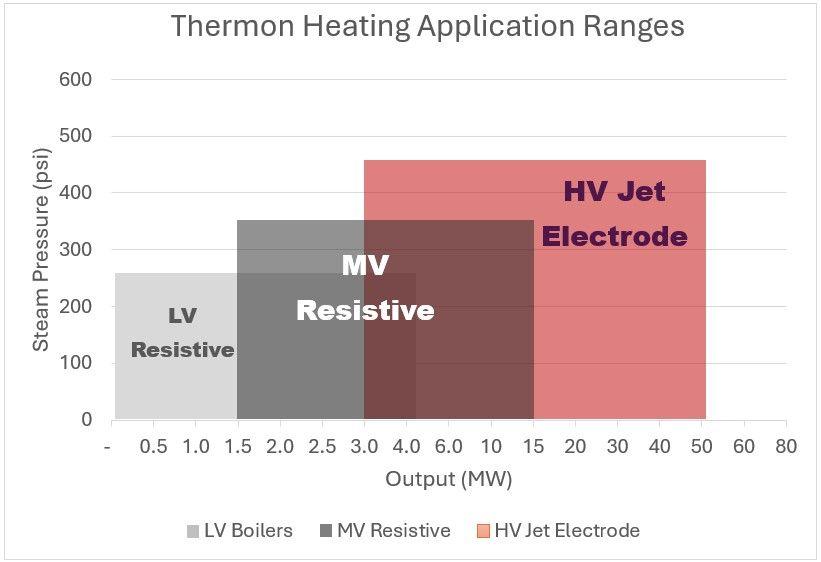
Electric boiler systems generally fall into three primary categories, each suited for different operating ranges:
- Low Voltage (208V–600V) Resistive Boilers
Best suited for smaller loads, typically under 4 MW, with steam pressures up to approximately 250 psi.
- Medium Voltage (4,160V–6,900V) Resistive Boilers
Designed for larger applications, delivering up to around 10 MW with steam pressures exceeding 400 psi.
- High Voltage (4,160V–15,000V) Jet Electrode Boilers
Offering the broadest operating range, from approximately 0.8 MW to over 50 MW, while supporting higher-pressure applications.
Each solution has its place depending on system requirements—but the decision becomes more complex as demand increases.
When Scaling Becomes Complex
As steam demand grows, resistive boiler systems can introduce increasing levels of complexity. Meeting higher loads often requires multiple units, which can lead to:
- Larger system footprint
- More controls and maintenance requirements
- Increased electrical infrastructure needs
- Added installation time and coordination
"One of the biggest challenges we see is the point where scaling with multiple resistive units starts to create more complexity than value" Tanner Mullins, Business Development Manager at Thermon
A key factor that is sometimes underestimated is transformer cost and availability. A typical 13.2 kV to 480 V step-down transformer can range from approximately $650,000 to over $1 million installed, depending on configuration and site requirements. When multiple resistive boilers are needed, these costs—and associated lead times—can escalate quickly.
The Case for Electrode Technology
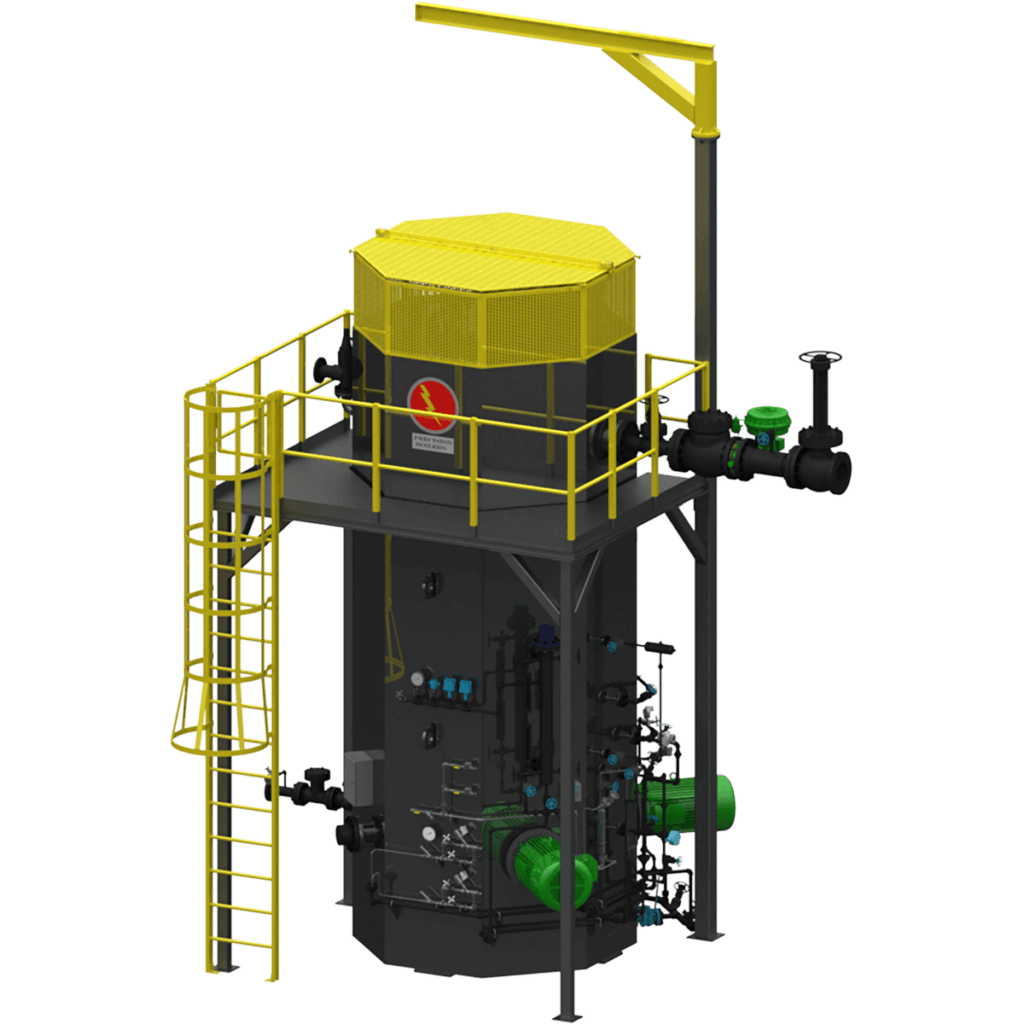
At a certain threshold, high-voltage electrode boilers can offer a simpler and more efficient solution.
Instead of relying on multiple resistive boilers and transformers, a single electrode boiler can often meet system demands while reducing overall infrastructure requirements.
“With high-voltage electrode technology, you can often consolidate capacity into a single unit and eliminate the need for multiple step-down transformers,” Mullins explains. “That can significantly simplify the overall system design and reduce footprint in your boiler room.”
In addition, electrode boilers offer turndown ratios greater than 100:1, allowing efficient operation even at low load conditions without requiring multiple units for standby.
Infrastructure Still Drives the Decision
While electrode technology can provide clear advantages at scale, the optimal solution always depends on site-specific conditions.
Key considerations include:
- Existing electrical service (low, medium, or high voltage)
- Substation and transformer capacity
- Available space and constructability constraints
- Long-term electrification and decarbonization strategy
These factors ultimately determine where the crossover point lies between resistive and electrode solutions.
Final Takeaway
If your steam demand exceeds what a single resistive unit can deliver—or requires multiple boilers and significant transformer investment—it may be time to evaluate high-voltage electrode technology.
Thermon is uniquely positioned to support customers across all three solution types, helping identify the right approach based on performance needs, infrastructure realities, and long-term scalability goals.
Want to explore the right solution for your facility?
Connect with our team to discuss your application and upcoming electrification or decarbonization projects.