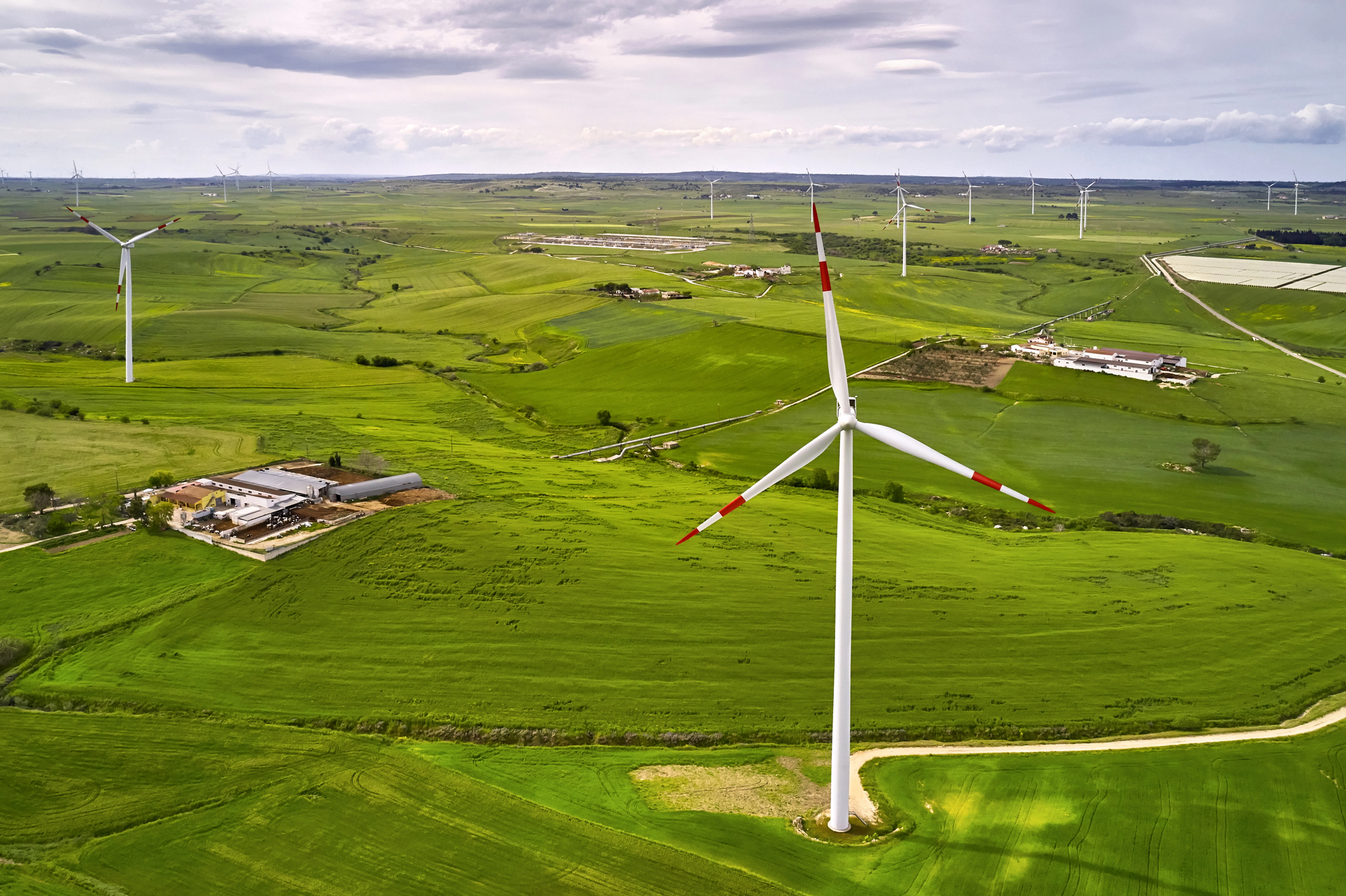
Efforts to reduce the amount of carbon dioxide (CO2) emissions have taken center stage as a top objective in both the public and private sectors. The reasons to curb CO2 emissions are obvious – chief among them, slowing the effects of anthropogenic climate change, reducing dependence on fossil fuels, incorporating renewable energy sources, and compliance that leads to financial incentives.
What if a company could achieve these objectives by making a change to its process heating system? Electrification offers a promising solution.
How Does Gas-to-electric Conversion Decarbonize the Industry?
Electrification can be a key strategy for eliminating or reducing emissions of harmful gases, but it can also improve overall efficiency.
Electrifying process heating is highly efficient because it generates heat directly, requiring less equipment, fewer processes, and the temperatures can be precisely controlled, which reduces heat waste. These methods are also suitable for a wide range of heating applications, such as heating metal surfaces, ambient air, water, or viscous liquids.
For companies that rely on process heating systems, making the switch from natural gas-fired heaters to electric heaters holds many advantages. Modern electric heating systems, such as those offered by Thermon, can be used to provide clean, reliable, and safely controlled heating for industrial processes.
Approximate turndown ratio for electrical heaters, compared to approximately 1:10 for gas-fired services.
Integrating Electrical Generators
Critics of electrification will quickly point out that electrical energy generated in power plants comes from the combustion of fossil fuels. While it is true that some power plants use fossil fuels to generate power, factors depend on the type of fuel and energy source, and the type and efficiency of the power plant. However, switching to an electric system, these facilities can operate more efficiently and easily integrate local renewable sources. In other words, a facility does not have to wait for renewable energy facilities to be built. They can expand their power sources, adding stability to their energy profile in the process.
Precision Control
Electrification of heat processes can be more efficient than burning fossil fuels. Natural gas, for example, burns at a higher temperature than required for most processes, and it is easier to keep burners engaged rather than firing them off and on repeatedly. Therefore, natural gas is often burned unnecessarily. The maximum turndown ratio for gas-fired services is approximately 1:10 versus a turndown of about 1:60 for electrical heaters.
Electrical heating can be tightly controlled by advanced control systems and algorithms. Unlike natural gas, these systems only apply current to the heaters when it is required and only as much as is needed to reach the appropriate temperature threshold.
Improved Safety
Natural gas is a flammable vapor that must be contained and kept within certain concentrations, away from sources of ignition that are not the burners. Gas leaks, industrial accidents, natural disasters, and other such incidents can cause natural gas to be released and ignited.
Electric process heaters eliminate the hazard of gas leaks and the potential for gas-fueled fires or explosions.
Reduced Downtime
The startup and shutdown of natural gas-fired heaters is time-consuming and potentially dangerous. High heat, along with the potential for asphyxiant gases, are among other concerns that preventive maintenance (PM) procedures must have a significant amount of “wait time” for.
Unlike combustion chambers, there is little chance of asphyxiant gas buildup in electric systems, and no need for air purging. Electric heating elements stop producing heat the instant the current is removed from the heating elements and cool much more quickly. In addition to increased efficiency, electric systems require less maintenance. The flexibility in electrical heating is the integration with the customer’s DCS and SCADA system for remote start and monitoring.
Smaller Footprint
Electric heating solutions tend to be smaller than natural gas heaters in both footprint and total installed heating power. With natural gas heaters, there is a tendency to have a few large furnaces with boilers, blowers, and other equipment to push the air through the rest of the facility. This requires heaters to be oversized.
With electric heating elements, heating can be performed anywhere there is a power connection, making it more localized and more efficient while occupying less space overall. With a smaller footprint comes the ability to utilize process equipment, or pressure vessels, with a retrofit electric heater using the existing mechanical allowance or flange size. This allows the design to be optimized and include spare capacity or increase the throughput for the process heating.
Hybrid Methods for Electrification
Even with so many advantages to electrifying heating systems and decarbonizing industrial processes, it can still be overwhelming to figure out where to begin. Rather than investing the time and money into a total system exchange from combustion heat to an entirely electric system, many companies use a hybrid plan, making the transition between combustion heat and electrical heat as time, equipment, and budget allow. Thermon offers a variety of electrical heating products, as well as custom heating solutions, to make this transition much easier.
Electric Boilers
Every step of the steam generation electrification process can be optimized using Thermon products. Besides the boilers themselves, calorifiers, heat exchangers, steam blow off tanks, condensate receivers, and many other components are available. Horizontal and vertical boiler designs provide flexibility in selecting the appropriate system based on the available footprint.
Immersion Heaters
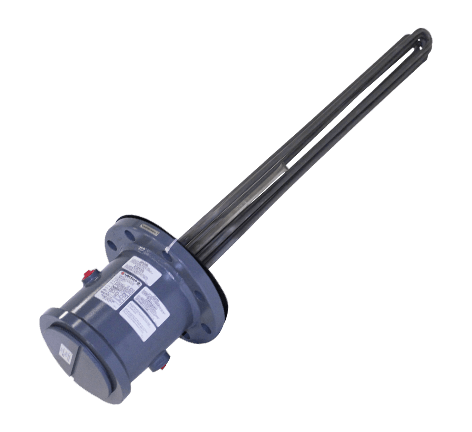
For direct process heating, Thermon makes numerous varieties of immersion heaters, such as the Caloritech CX line. These immersion heaters are designed to be in direct contact with the fluids they are heating, leading to more efficient heating than indirect natural gas heating.
Engineered for easy installation, these immersion heaters can be attached directly to existing vessel ports and come in a variety of standard sizes, and can be made into custom sizes as well. Thermon differs from any electric heater manufacturer globally by offering third-party validation of the design via HTRI, CFD analysis, and scientific testing.
Circulation Heaters
Circulation heaters function similarly to shell and tube heat exchangers commonly used in industry, except that a circulation heater directly heats the shell side fluid by electric heating elements instead of indirectly by first heating a heat transfer gas or fluid (via natural gas heaters) that is then piped through tubes within the vessel. As such, circulation heaters can be made incredibly efficient in comparison to the heat exchanger. The Thermon circulation heaters are often designed to be used for superheating fluids, such as air, gas, or steam, or preheating oil or fuel.
Electric Heat Tracing
Decarbonizing industrial heat processes with electric heat tracing keeps pipeline temperatures regulated and keeps fluids flowing. Switching from a system that uses gas-fired heating to an electric heat tracing system can reduce carbon emissions and reduce heat waste, but electric heat tracing also requires less maintenance, increases plant efficiency, safety, and reduces operating costs.
Thermon, an industry leader in industrial heat processing, offers a complete line of electric heat trace products, including electric trace heaters, power connection kits, thermostats, and a comprehensive range of heat trace cables delivering constant watt, power limiting, or self-regulating power.
Tubing Bundles
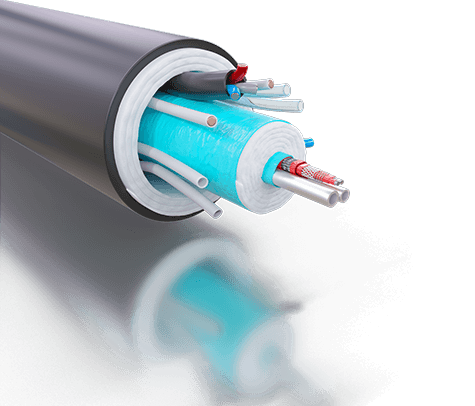
Thermon leads the industry, offering continuous emission monitoring system (CEMS) umbilical multiple tubing bundle solutions made to custom lengths and specifications. High temperature extractive and mercury (Hg) CEMS require stringent and often costly regulation and monitoring for emissions. Thermon has a long history of providing clients with solutions that address these increasing requirements, with proven products that meet or exceed specifications.
Thermon is the only tubing bundle manufacturer that can offer application-specific design data with each umbilical solution. For example, Thermon TubeTrace SE/ME with HPT-XR is a flexible, cut-to-length zone heater that is capable of up to 356° F (180° C), featuring extended circuit lengths and 10 AWG (2.6 mm²) bus wire construction. Product warranties ensure continued dedication to these solutions, as well.
Removable Blanket Heaters
Some applications call for temporary heating, such as when outdoor equipment is subjected to extremely cold weather. Fuels, oils, and lubricants become more viscous. Valves bind up, reducing flow and potentially causing hazardous conditions.
Thermon’s PowerBlanket line of removable blanket heaters can be used to apply heat to these devices. When conditions warm, the blankets can be removed, reducing the overall energy consumption, as compared to permanent, natural gas-fired heaters.
Electrifying a Boiler System: Example Case
The process of electrification of industrial heating will often utilize a hybrid stage where applications are capable of switching between combustion heat and electrical heat to accommodate transitory conditions, capacity requirements, or due to budgetary considerations.
One case example is that of a gas-fired boiler manufacturer integrating Thermon’s Caloritech CX flanged electric immersion heaters into a multi-fuel boiler setup. These hybrid boilers give flexibility for the plant to choose their source of heat that best fits the current financial and process conditions without the downtime normally required when switching between gas and electric operations.
Thermon has many options for converting a gas-fired boiler into an electrically heated boiler or hybrid boiler. For this specific application, Caloritech CX flanged immersion heaters were chosen. Available in many sizes, heater output levels, immersion lengths, and materials, the properly sized heaters were selected for the task, and Incoloy-sheathed heating elements were chosen to provide corrosion resistance and long service life. The CX line of heaters features optional built-in thermocouples, thermostats, and all of the necessary hardware for a quick installation and reduced downtime.
Besides the heating elements, Thermon also supplied Caloritech CPA series control panels for accurately heating water and maintaining working conditions. These panels provide digital temperature control, based on the UT320 series microcontrollers, using the minimum amount of energy required for the job.
Thermon, Inc.
Irrefutably, reduced CO2 emissions are better for the environment and can also be better for the bottom line of the manufacturing facility with integration of renewable energy sources, more precise control, less heat waste, safety, reduced downtime, and minimizing the facility’s carbon footprint.
Often, environmental and financial concerns are in conflict, but they don’t have to be with safe, reliable electric heating. Contact Thermon to learn more about how to convert gas-fired heaters into an efficient electric system.
Ready to Go Deeper?
Explore Thermon solutions, related technical resources, or connect with our team.