OVERVIEW
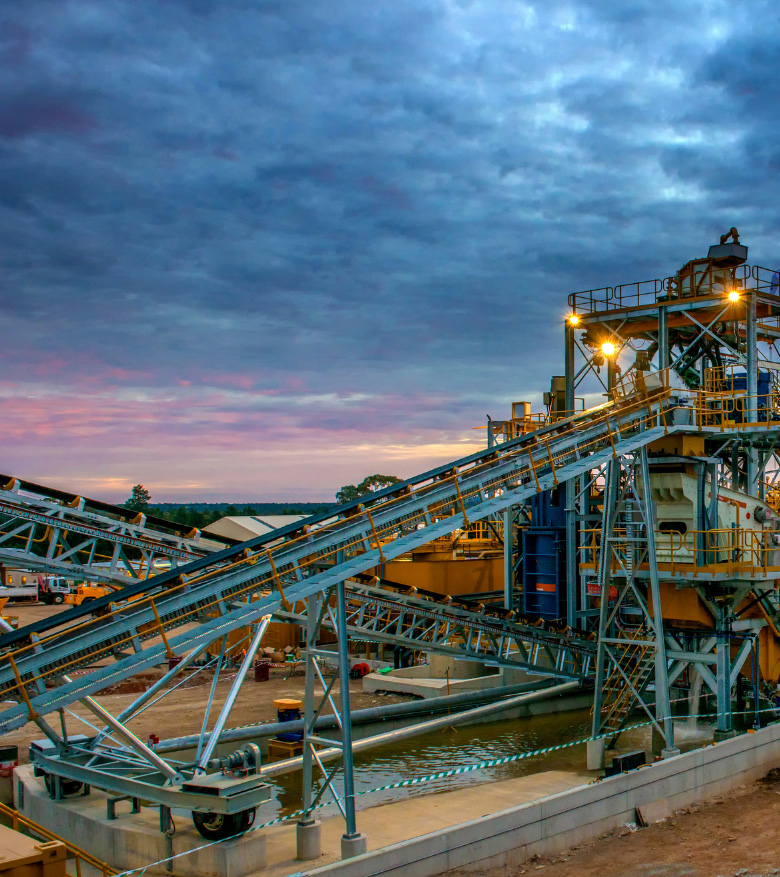
A gold mining operation in regional Western Australia required an immersion heating system for a 250m³ sodium hydroxide storage tank. The system needed to maintain reagent temperature above solidification threshold during near-freezing ambient conditions, protecting not just the tank, but the downstream distribution pipelines feeding the process.
THE CHALLENGE
The tank holds 50% w/w caustic soda at SG 1.5 — a highly alkaline solution operating at pH 11–14. At low ambient temperatures, solidification becomes a genuine operational risk with the potential to disrupt reagent supply across the entire system.
Material selection was a critical decision point: standard austenitic stainless steels are susceptible to stress corrosion cracking in strongly alkaline environments and were ruled out early. Pacific Automation worked with Thermon to specify a solution built around those exact constraints.
Sodium hydroxide storage tank
Thermal output across 42 elements
Operating temperature
Thermostat trip
THE SOLUTION
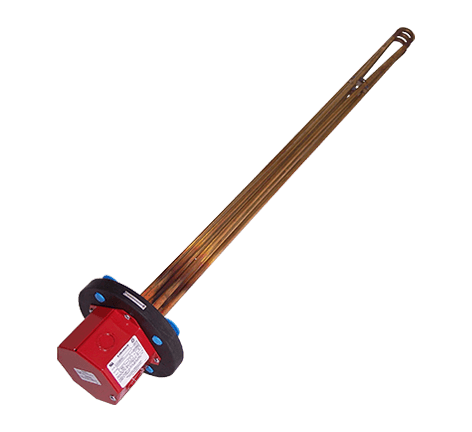
The Thermon CXI Series side-entry immersion heater was selected based on the process conditions and tank geometry. Incoloy 800 was specified for the element sheaths — chosen for its resistance to oxidation, high-temperature corrosion, and stress corrosion cracking in alkaline service.
Protrusion depth was configured to distribute heat throughout the tank volume while keeping elements clear of sediment deposits, reducing localized overheating risk and extending service life. The unit delivers 110kW across 42 heating elements, maintaining solution temperature between 20–25°C with a thermostat trip at 28°C. The system integrated directly into the site DCS — no vendor control panel was required.
Key specifications:
- Tank volume: 250m³ mild steel, continuous operation (24/7/52)
- Thermal output: 110kW across 42 elements
- Operating temperature: 20–25°C | Thermostat trip: 28°C
- Flange: ASME B16.5, 12″ R.F
- Protrusion depth: 3,048mm | Active heat zone: 2,743mm
- Element sheath: Incoloy 800 (UNS N08800)
With the specification confirmed, fabrication was managed to client-defined quality requirements.
FABRICATION & QUALITY ASSURANCE
Before a single component was manufactured, the quality framework was established. GA drawings were issued for client review and approval, and ITP hold and witness points were defined and agreed upfront — ensuring the inspection scope was locked in and aligned with client requirements before fabrication commenced.
FAT was conducted at Thermon’s Canadian manufacturing facility. For stakeholders unable to travel, remote witnessing via Microsoft Teams ensured full visibility of the factory acceptance process without compromising oversight. Prior to dispatch from the Perth warehouse, a formal notice of inspection was issued — closing out the quality process before the unit left the facility.
DOCUMENTATION
Documentation requirements were scoped and agreed with the client prior to purchase order. The final package included GA drawings, ITPs, material certificates, welder qualification records, weld procedures, NDT reports and procedures, hydrostatic testing reports and procedures, and handling procedures.
OUTCOME
Leveraging advanced design experience and state-of-the-art simulation capabilities, the heating system delivers predictable thermal performance that safeguards against reagent solidification, sustains operational continuity, and promotes consistent process chemistry throughout the facility
THERMON CXI SERIES
Engineered for continuous duty in demanding process environments, the CXI-series immersion heater combines robust construction with precise thermal control.
Protect Critical Process Fluids From Solidification
Need an industrial heating solution for caustic storage, reagent tanks, or demanding process environments? Connect with Thermon to discuss immersion heater systems engineered for your fluid chemistry, tank geometry, operating temperature, and site requirements.